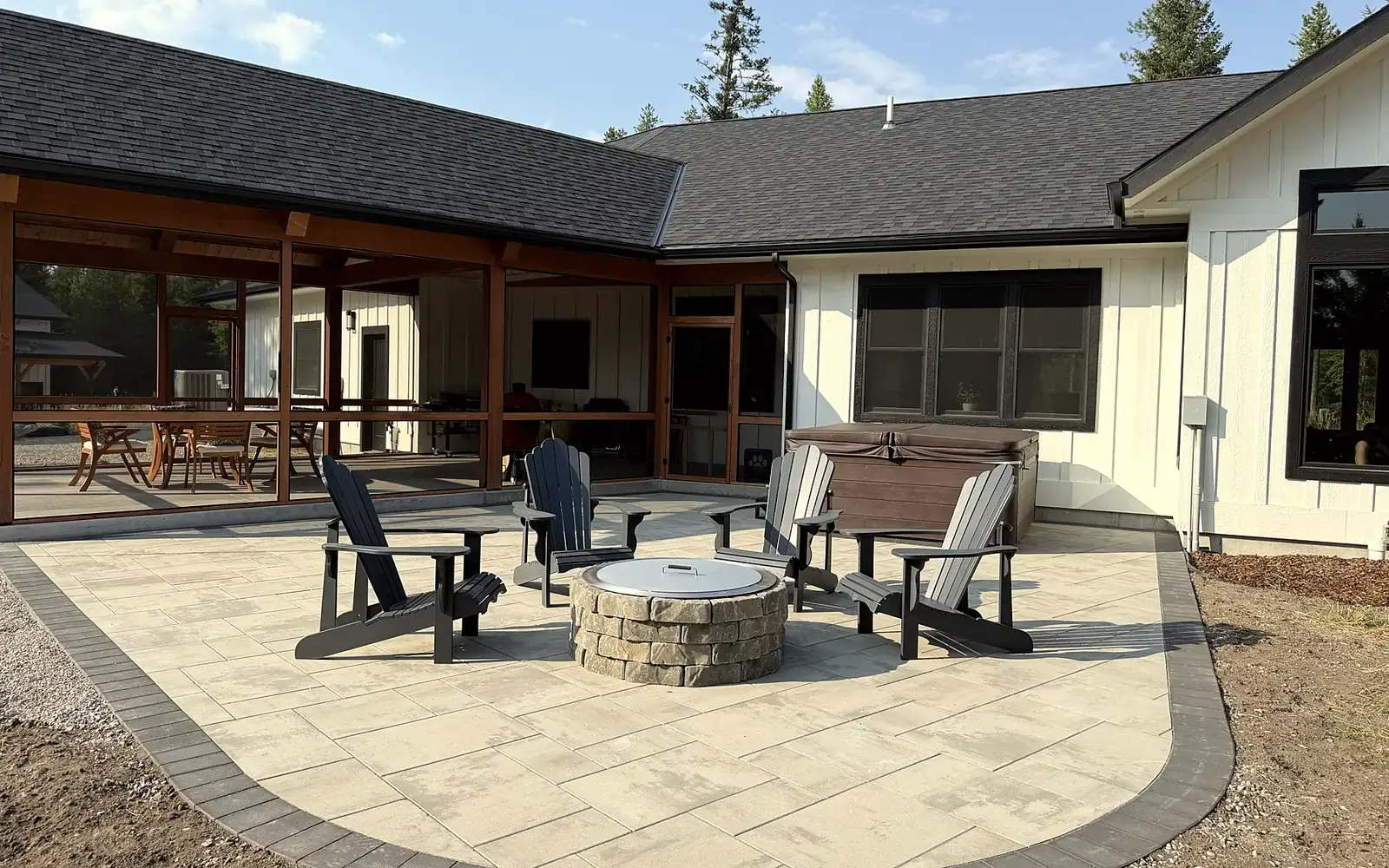
Defensible space isn't one rule for the whole yard, it's three zones, each with different requirements based on distance from the house, and the zone closest to your home is the strictest. Get the immediate zone right and you've done the highest-impact part of the work, even before touching the outer zones.
Three Defensible Space Zones Explained
Wildfire defensible space guidance generally breaks a property into three distance-based zones: an immediate zone right against the structure (roughly 0–5 feet), an intermediate zone extending further out (roughly 5–30 feet), and an extended zone beyond that (roughly 30–100 feet) (Ready.gov: Defensible Space Guide). Each zone has a different job, the closer the zone, the less fuel it should hold, full stop.
Immediate Zone: Remove Ladder Fuels & Dead Debris
The zone touching your house is the one that matters most. Dead leaves, needles, and debris, especially anything that's collected in gutters, under decks, or against siding, creates a direct path for fire to reach the structure. This zone should be kept essentially clear of flammable material, with nothing that lets a ground fire "ladder" up into shrubs, decks, or eaves.
Intermediate Zone: Spacing & Fuel Breaks
Further out, the goal shifts from elimination to spacing. Trees and shrubs spaced apart, with lower branches limbed up, reduce the chance that fire moves continuously through vegetation toward the house. This zone is where thinning and pruning do more work than removal. It's about breaking up continuous fuel, not clearing the yard entirely (DNRC Montana: Wildfire Prevention & Preparedness).
Fire-Resistant Plant Choices
Plant choice matters within these zones. Species with lower resin content and higher moisture retention generally burn less readily than dense, resinous ornamentals, a distinction that's part of why fire-conscious landscape design leans toward certain native and adapted species rather than ornamental evergreens planted close to structures (PNNL Building America: Defensible Space).
Materials to Avoid Near the House
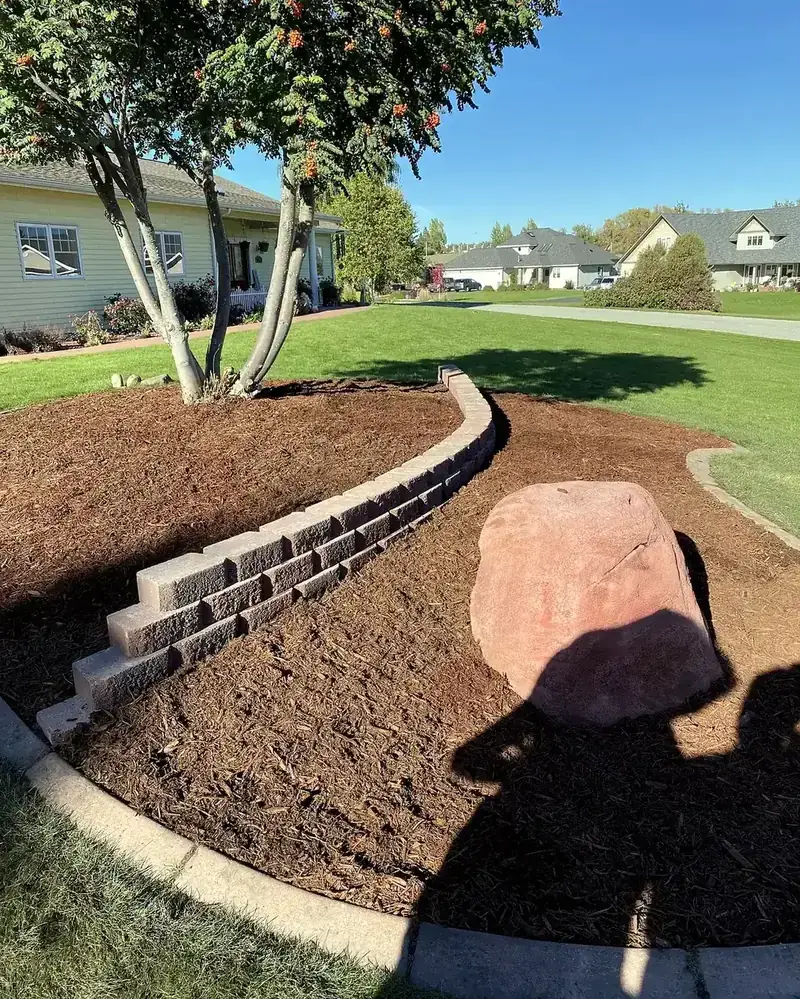
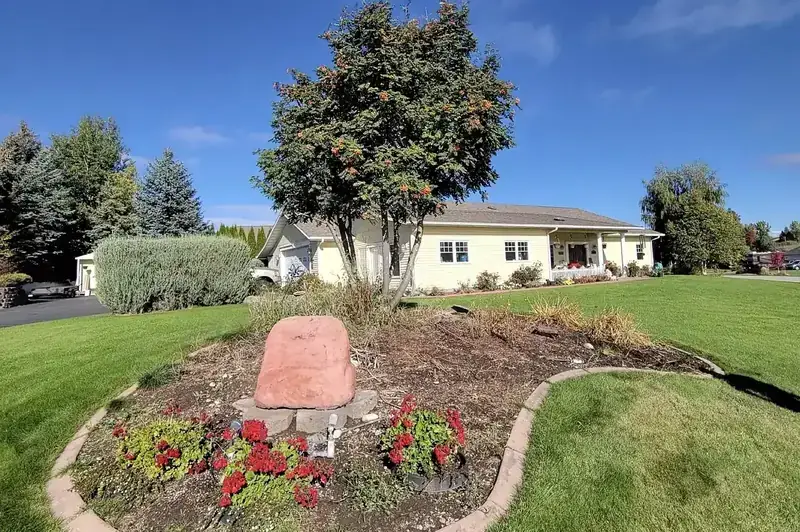
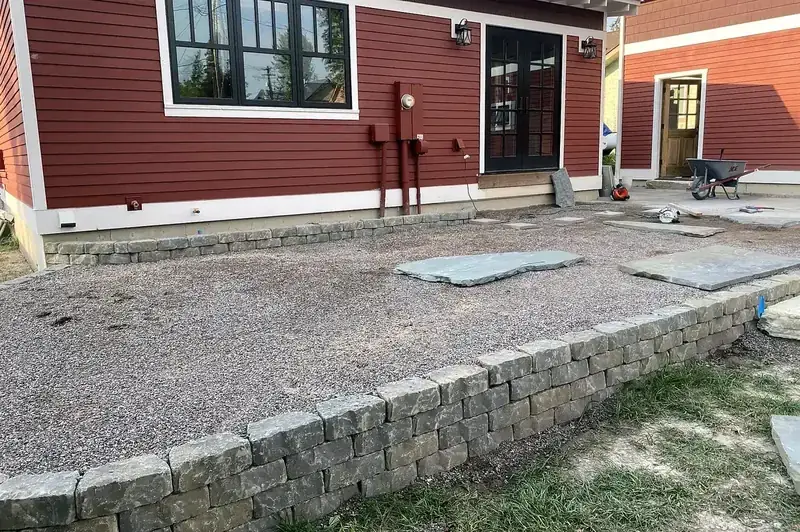
In the immediate zone, flammable groundcover like bark mulch and dry wood chips are generally discouraged right against the structure. Gravel, rock, and hardscape materials like pavers don't carry fire the way organic mulch can. This is one of the clearest places where a landscaping choice directly affects fire risk, not just aesthetics.
Compliance in the Flathead Valley
Wildfire risk is a real consideration across the valley, and DNRC publishes defensible space guidance specific to Montana properties. If you're in an HOA community, check whether it has its own defensible space or landscaping requirements layered on top of state guidance, those vary community to community and are worth confirming directly rather than assuming.
Extended Zone: Thinning Without Clear-Cutting
The furthest zone out from the house isn't about removing everything. It's about breaking up continuous, dense fuel so a fire has a harder time moving quickly across the property toward the intermediate and immediate zones. That typically means thinning overcrowded stands of trees and removing dead or dying vegetation, while leaving healthy, well-spaced trees in place. The goal in this outer zone is slowing a fire's approach, not eliminating every tree on the lot.
Properties Where This Matters Most
Not every lot in the valley carries the same wildfire exposure, but forested lots, hillside properties, and homes backing up to undeveloped land generally carry more risk than a lot in the middle of a developed neighborhood. Lake-adjacent and forested properties often sit on narrower access roads with dense tree cover on both sides, which is part of why defensible space work tends to matter more, not less, the closer a property sits to the water and the trees around it.
Maintaining Defensible Space Year to Year
Defensible space isn't a one-time project, vegetation grows back, debris accumulates again every fall and spring, and a property that was compliant last year can drift out of compliance without anyone doing anything wrong. Treating it as an annual check, tied to the same seasonal cleanup that already needs to happen, is a more realistic approach than a single upfront effort meant to last indefinitely. The immediate zone in particular needs the most frequent attention since it accumulates debris fastest and carries the highest consequence if it's neglected.
Balancing Defensible Space With Privacy and Shade
A common concern is that defensible space work means stripping a property of trees and privacy. In practice, it's more about spacing and species than elimination, thinning overcrowded stands, removing dead or dying material, and choosing lower-risk plantings closer to the house still leaves room for shade trees and privacy screening further out in the intermediate and extended zones. The tradeoff is real but it's rarely all-or-nothing.
A hedge or tree line used for privacy along a property edge can often stay in place with some adjustment rather than full removal, spacing individual plants further apart, limbing up lower branches, and clearing dead material underneath reduces how readily fire could move through it while keeping most of the screening effect intact. The zones closest to the house are where the strictest standard applies; further out, there's more room to balance defensible space against the reasons you planted there in the first place.
What Iron Peak Does
We clear debris and ladder fuels from the zone closest to structures and can switch immediate-zone beds from bark or mulch to gravel or rock where it makes sense for fire risk. Our yard clearing & cleanups page covers debris and fuel removal, and our rock & mulch installs page covers material swaps for defensible space zones. We work properties across the valley, including Bigfork and Lakeside, where forested and lake-adjacent lots carry higher exposure.
Want your immediate zone reviewed? Get an estimate.