A plow blade doesn't know where your pavers end and your lawn begins, so the way to protect a Flathead Valley yard through winter is marking real edges before the snow flies and piling snow somewhere it won't crush or drown anything. Most of the damage we see every spring traces back to one missing stake or one badly chosen snow pile from November.
Why Plowing Is Hard on a Yard
A plow operator is working fast, often in the dark or in blowing snow off Flathead Lake, and steering by feel more than by sight. Pavement edges buried under six inches of snow all look the same from a truck cab. A blade that catches even an inch high on a paver joint or a wall cap can chip stone, pop a paver loose, or shear off a chunk of sod along a driveway edge. None of that is really the plow driver's fault, it's a visibility problem, and visibility is something a homeowner can fix before the season starts.
Marking Edges Before the First Snow
Reflective driveway stakes are the simplest fix, and they work because they give a plow operator a line to follow that doesn't disappear under snowfall. Set them a few inches inside the actual edge of your driveway, walkway, or paver patio border, not directly on it. That inside margin matters. A stake set right on the edge still lets a blade clip the true edge if the driver misjudges by even a little, while a stake set slightly inside gives real buffer. Do the same along any retaining wall that runs near a driveway or parking area, and along lawn edges bordering a plowed surface.
Protecting Pavers, Wall Caps, and Edging
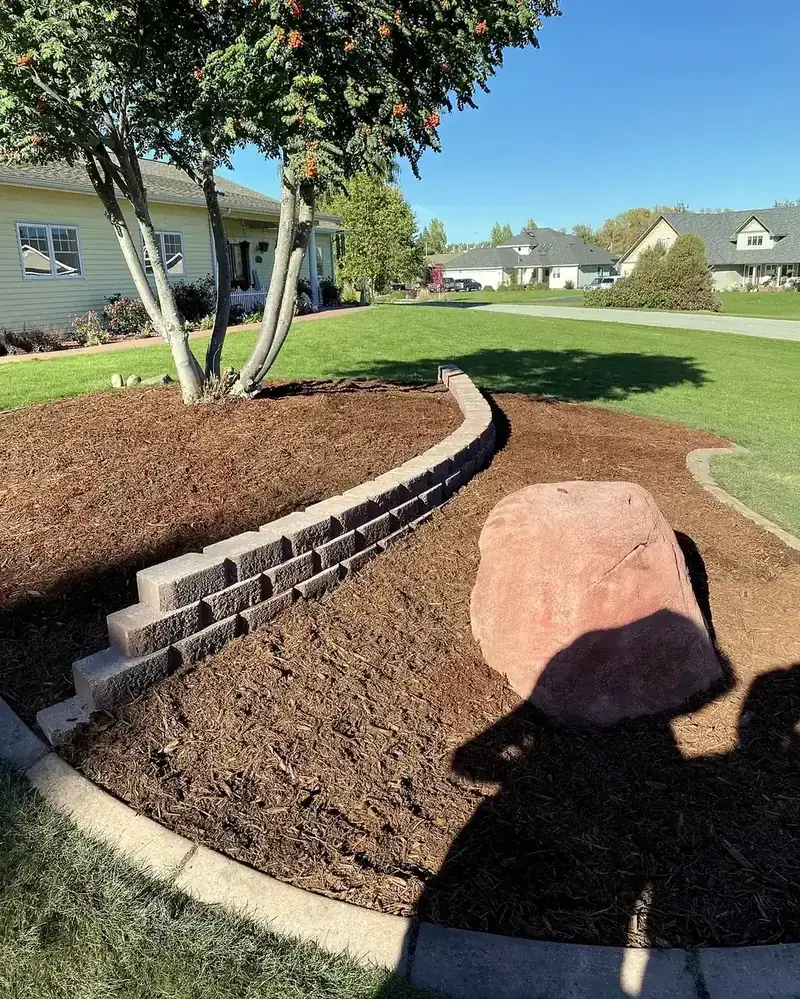
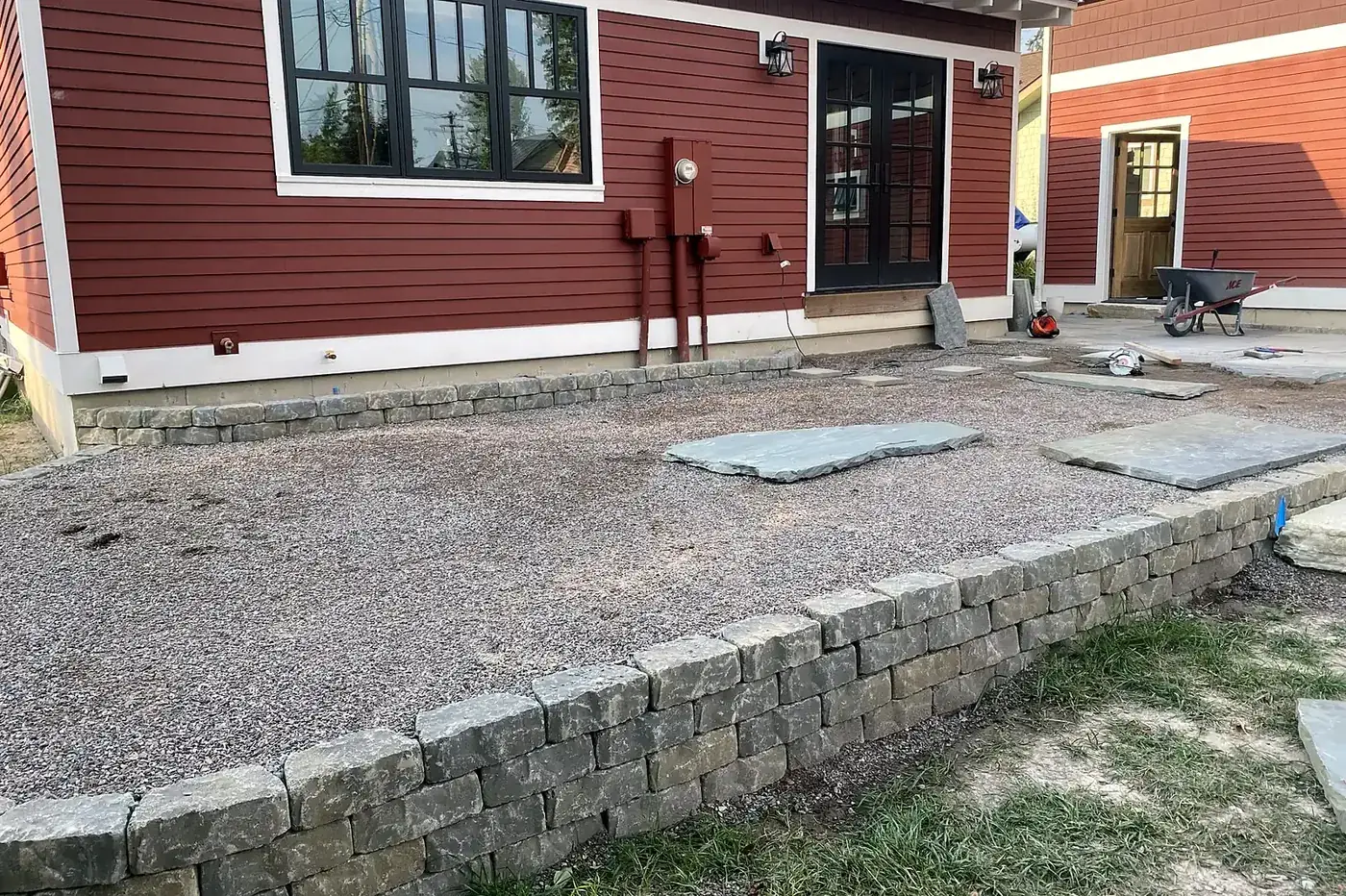
Paver patios and walkways near a plowed driveway are at the most risk, especially where the paver field sits flush or nearly flush with the pavement. A slightly raised edge restraint or a visible border course helps a plow rider see where hardscape starts. Wall caps on a low retaining wall near a driveway are just as vulnerable, a caught blade can crack or dislodge a cap in one pass. If you've got a wall or paver edge that runs close to where plowing happens, that's worth pointing out to whoever plows for you, even a quick heads up before the season changes how carefully they treat that stretch.
Where to Pile Snow
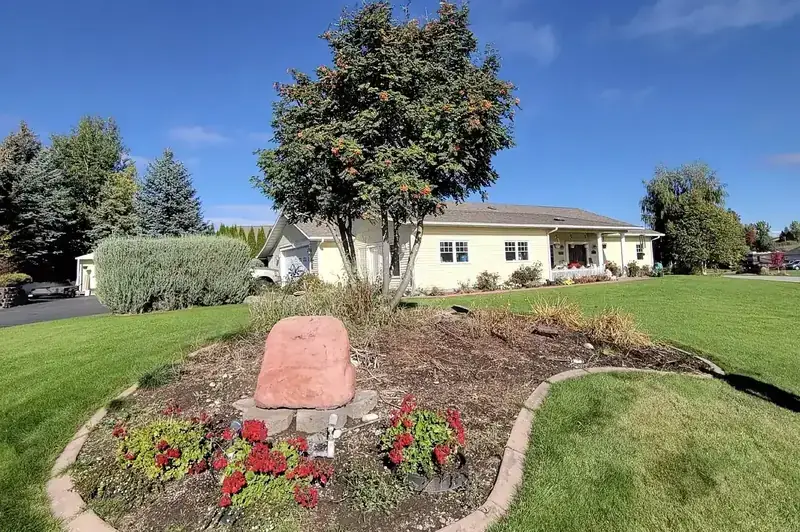
Snow piled in the wrong spot causes its own damage over the winter, separate from anything a blade does. A pile against a young tree or a shrub bed can snap branches under its weight and then soak the root zone with meltwater for weeks once it starts to thaw. A pile against a paver edge or a wall cap keeps that section wet and freezing and thawing longer than the rest of the yard, which is exactly the cycle that works stone loose over a winter. The better spot is open lawn or gravel that can take both the weight and the eventual meltwater without anything underneath to damage. If your lot doesn't have an obvious spot like that, it's worth deciding on one before the season starts rather than improvising during the first storm.
Lawn Edges Take Damage Too
A plowed edge along grass isn't just a hardscape problem. Repeated plowing along the same line compacts and tears the sod strip closest to the pavement, and that strip often comes out of winter as a torn, uneven edge rather than a clean line. Some of that is unavoidable if the driveway is plowed regularly, but a slightly wider gravel or mulch buffer between pavement and lawn gives the plow more room to work without chewing directly into turf, and it's a lot easier to re-grade a gravel strip in spring than to reseed a torn lawn edge every year.
Salt and De-Icer Near Plants and Hardscape
Salt and other de-icers thrown or tracked off plowed surfaces work into soil near the edge of a driveway and can stress or kill grass and shrubs planted close to it over a few seasons. Pavers and concrete can also take surface damage from certain de-icers over time. Choosing a plant-safe de-icer, or keeping heavy salt use to the pavement itself rather than the edges, reduces that slow damage without giving up on ice control where you actually need it.
What to Check Once the Snow Melts
Spring thaw is when plow damage actually shows up. Walk the edges of every driveway and walkway once the snow is gone and look for chipped or shifted pavers, cracked or dislodged wall caps, torn sod strips, and any spot where a stake got knocked over or buried and the edge took a hit as a result. Catching it early matters because a single loose paver or a small torn sod strip is a quick fix, while the same damage left through another summer of freeze thaw cycles and foot traffic tends to spread.
What Iron Peak Does
We don't plow snow, but we build the pavers, walls, and edges that have to survive a Flathead Valley winter of it, and we repair what a hard season leaves behind. Our hardscaping page covers how we build edges and wall caps to hold up better against exactly this kind of seasonal wear, and our yard clearing & cleanups page covers the spring reset once the snow is gone. We work across the valley, including Bigfork and Columbia Falls, where lakefront wind and higher elevation both add their own wrinkles to a normal winter.
Found plow damage from last winter, or want your edges marked before this one hits? Get an estimate and we'll take a look.