Site prep before landscaping a new build in Columbia Falls means getting the grade, soil, and drainage right before anything else goes in, rough grading the lot, stripping and saving usable topsoil, compacting fill so it won't settle unevenly, and sloping the ground away from the foundation. Skipping or rushing any of those steps means the landscaping built on top of it inherits the problem.
Rough Grade vs. Finish Grade
Rough grading happens right after construction and sets the overall shape of the lot, moving the large volumes of soil left behind by excavation and establishing the basic slope away from the house. Finish grading comes later and is a much more precise pass, shaping the surface to the exact contours needed before sod, beds, or hardscape actually go down. Treating these as one step instead of two is a common shortcut that shows up later as low spots that pond water or high spots that shed it too fast for new grass to establish evenly.
What Happens to Topsoil During Excavation
New construction excavation typically strips off the original topsoil to get down to stable subsoil for the foundation, and what happens to that topsoil afterward matters more than most homeowners realize during the build. Topsoil stored separately during construction, rather than mixed into fill or hauled off entirely, can be spread back over the finished grade where it actually supports plant and lawn growth. A lot that had its topsoil buried under fill or trucked away often needs new topsoil brought in before planting has any real chance, which is an avoidable cost if the original soil gets set aside instead of treated as waste.
Why Compaction Matters More Than It Looks
Fill soil that isn't properly compacted during construction will keep settling for months or years afterward, unevenly, as it consolidates under its own weight and whatever gets built or planted on top of it. That settling is invisible during the build and shows up later as a sunken area near the foundation, a walkway that's tilted from where it was originally set, or a low spot in the lawn that collects water every spring. Getting compaction right before finish grade and hardscape go in is far cheaper than fixing settling after a patio or a walkway has already cracked or shifted because of it.
Drainage Away From the Foundation
Grading a new build's lot to slope water away from the foundation is one of the most important things site prep accomplishes, and it has to happen before landscaping, not after. A finished lawn or a paver patio built on top of grading that pitches the wrong way doesn't fix the drainage problem, it just hides it under new material until the next heavy rain or spring melt makes it obvious again. This is exactly the kind of issue that's simple to correct with equipment before anything is planted or paved, and genuinely expensive to correct once hardscape or an established lawn sits on top of the wrong slope.
Columbia Falls Soil and Site Conditions
Lots around Columbia Falls run from sandy, well drained ground near the river to heavier clay further out, and that variation changes how a site behaves during excavation and how it drains once grading is finished. A rocky subsoil layer, common in parts of this area, can also affect how deep excavation equipment can economically dig and how much fill or amended soil a finished lot actually needs. None of that shows up on a plan set, it shows up once equipment is actually on the ground, which is part of why site prep benefits from someone who's dug in this specific area before rather than working purely off a generic plan.
Timing Site Prep Around a Short Building Season
Northwest Montana's building season is shorter than warmer climates get, and site prep is one of the first things a hard freeze or an early snow can stall. Excavation and compaction both go faster and more predictably in dry ground than in mud or frozen soil, so scheduling that work earlier in the season, rather than pushing it to the last available weeks before winter, leaves more margin if weather or equipment availability shifts the timeline. A finish grade rushed through in freezing conditions to beat the snow rarely comes out as clean as one done with normal working conditions and a reasonable schedule behind it.
Sequencing With Hardscape and Landscaping
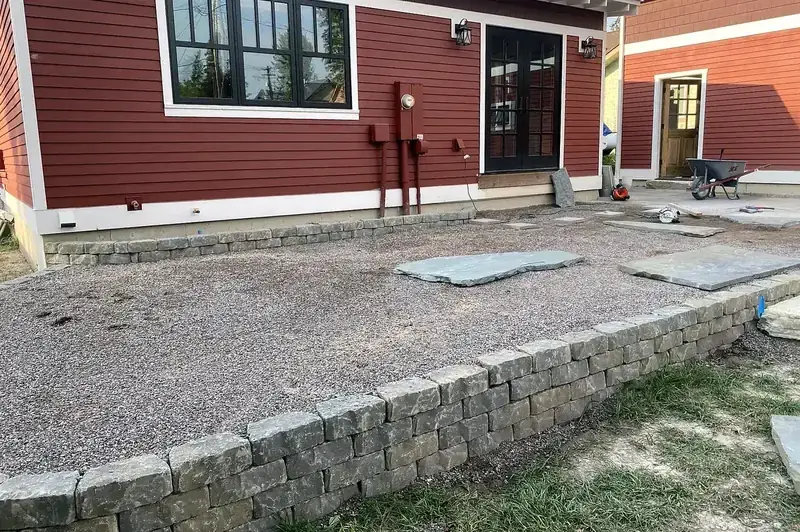
Site prep isn't a standalone step, it's the foundation that everything after it depends on. Hardscape like a patio or a retaining wall needs a compacted, correctly graded base to sit on, and a lawn or planting bed needs finish grade and usable topsoil to establish in. Building hardscape or landscaping before grading and drainage are fully resolved usually means redoing that work later once a drainage or settling problem shows up underneath it. Our new construction grading guide goes deeper into how grading sequencing works on a fresh build specifically.
What Iron Peak Does
We handle the grading, topsoil, and drainage work that has to happen before a new build in Columbia Falls is ready for lawn, beds, or hardscape, sequenced so each later step has a solid base to build on instead of a shortcut to work around. Our landscape renovations page covers how we approach grading and drainage on a fresh lot, and our hardscaping page covers what a compacted, well graded base needs to look like before a patio or wall goes in. We work new builds across the valley, including Columbia Falls and Kalispell.
Starting a new build and need the site ready for landscaping? Get an estimate and we'll walk the lot with you.