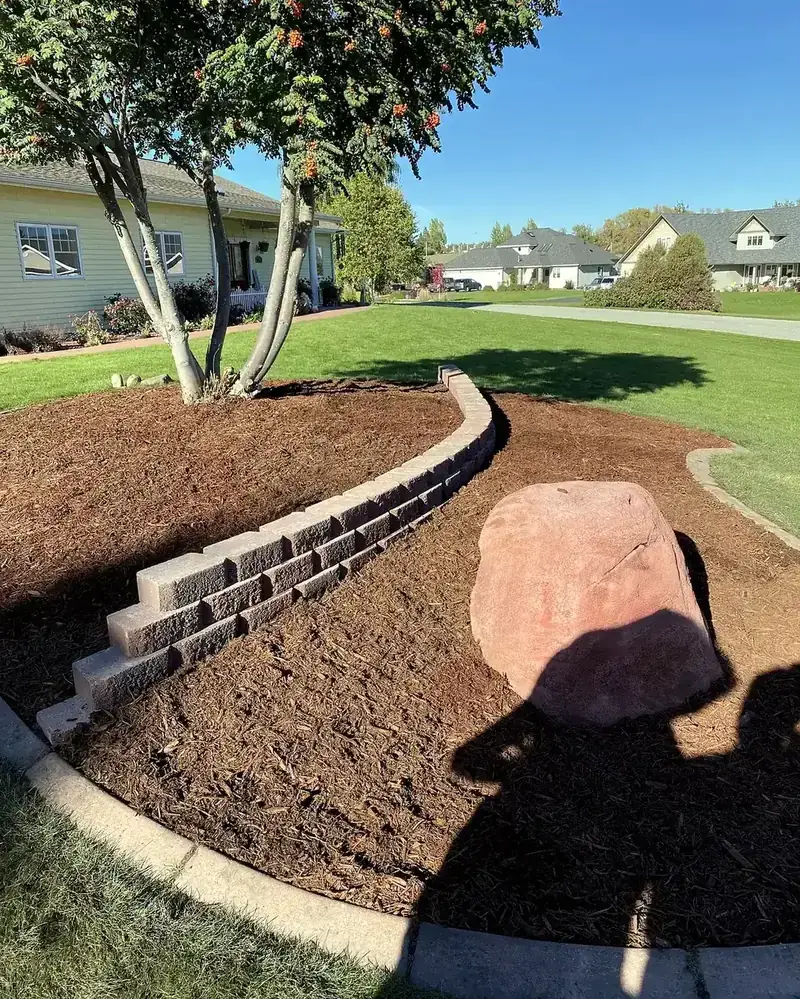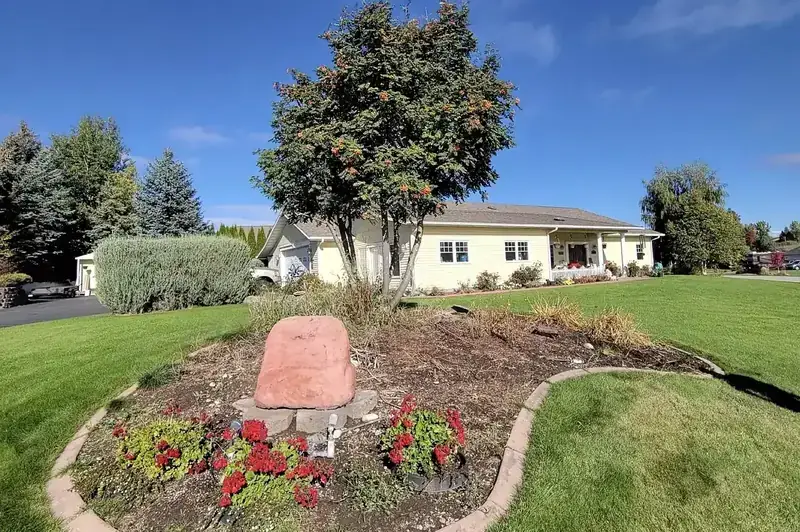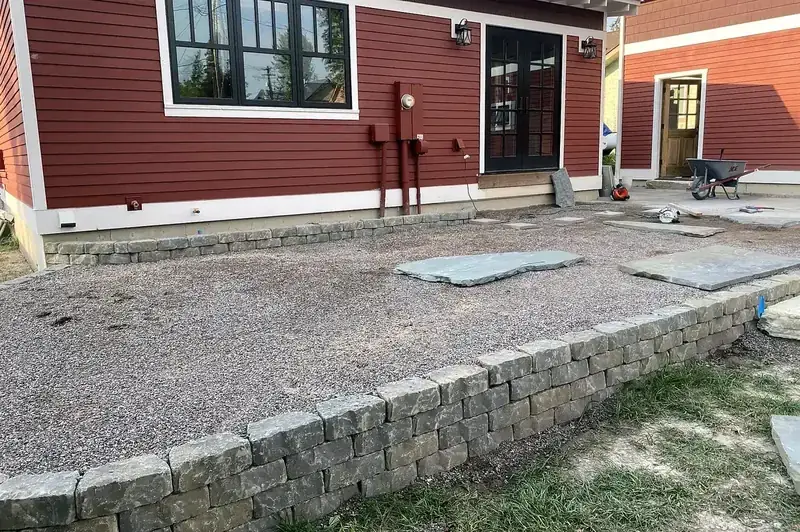
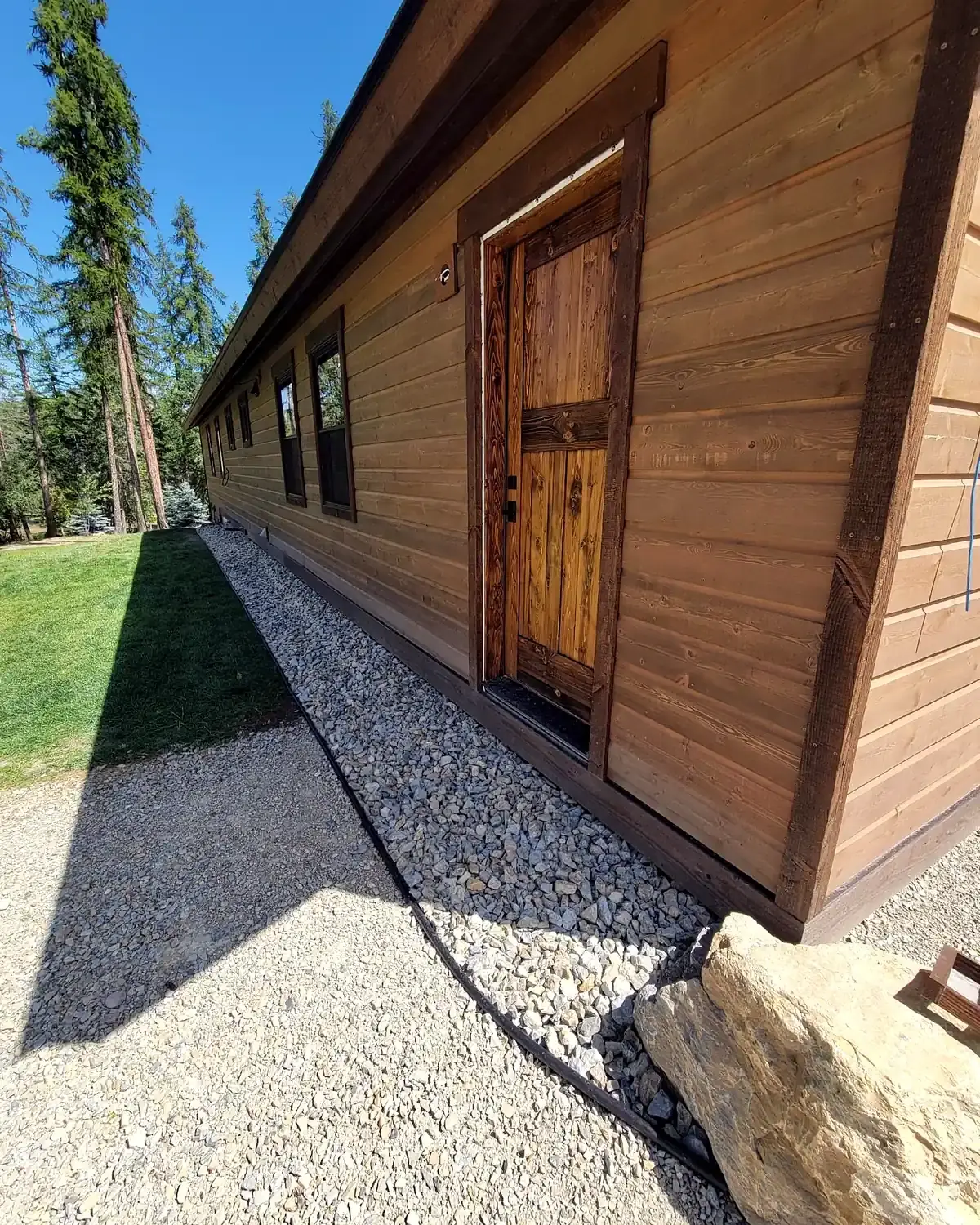
Montana's freeze-thaw winters change the math on rock versus mulch in a way milder climates don't have to think about. Rock holds up for years but settles and costs more up front; mulch is cheaper to start and better for soil health, but our winters break it down roughly every two to three years instead of the four or five you'd get in a warmer state.
How Freeze-Thaw Cycles Damage Mulch
Organic mulch (bark, wood chips) breaks down through a combination of moisture, temperature swings, and biological activity. Freeze-thaw cycles accelerate that breakdown by physically working the material apart season after season. In the Flathead Valley, that shortens mulch's usable life compared to regions with milder winters, which is why a bed that looked full in spring can look thin and gray by the following year (Horizon Landscaping MT: Mulch Refresh Frequency).
Rock Settling in Winter: Plan for It
Rock isn't maintenance-free either. It just fails differently. New rock beds typically settle noticeably after their first winter as material compacts and works down into the soil beneath it, so a bed that looks perfectly full in October can look thinner by spring. That's normal and expected, not a sign of a bad install, and it's worth budgeting a small top-off rather than assuming the first fill is the last one you'll need.
Mulch's Real Advantages
Mulch isn't losing this comparison across the board. It breaks down into organic matter that actually improves soil over time, which rock never does. It suppresses weeds while it's fresh, keeps root zones cooler in summer, and costs less to install initially. For active planting beds where you want soil health to improve year over year, mulch still does something rock can't.
Rock's Real Advantages
Rock wins on durability and low maintenance, it doesn't break down, doesn't need annual refreshing, and holds up to Montana winters without losing its function. It also reads more finished and permanent, which matters in beds you want to look sharp with minimal upkeep, like foundation borders or high-visibility front beds.
Best Rock Types for This Climate
Not all rock performs the same here. Angular, crushed stone locks together and stays put better than smooth, rounded river rock, which tends to shift and migrate, especially on any kind of slope (Cultivating Flora: Montana Hardscapes). If you've seen a rock bed that's spread out of its edging over a few years, rounded stone with no real interlock is usually why.
The Hybrid Approach
Most well-planned yards here don't pick one material for the whole property, they use rock where durability and low maintenance matter most (foundation beds, high-traffic borders, drainage-prone areas) and mulch where soil health and plant performance matter more (active perennial beds, areas you're actively planting into). That split gets you the strengths of both without fighting either material's weak point.
Cost Considerations Over Time
Rock costs more to install initially but doesn't need replacing on a regular cycle the way organic mulch does. Mulch is cheaper up front but that cost repeats roughly every two to three years here as it breaks down and needs refreshing (Horizon Landscaping MT: Mulch Refresh Frequency). Neither material is objectively "cheaper", it depends on whether you're weighing the upfront number or the cost over five or ten years, and that answer can be different bed to bed on the same property.
Edging Matters as Much as the Material
Whichever material you choose, the edging holding it in place determines how well it stays put. Rock without solid edging migrates onto lawns and walkways over time, especially rounded stone on any kind of slope. Mulch without edging washes out in heavy rain and blows around in wind. A lot of "which material failed" complaints are actually an edging problem, not a material problem. The bed border wasn't built to contain what's inside it.
Weed Barrier: Helps Less Than People Expect
Landscape fabric under rock is often sold as a permanent weed solution, but over a few seasons, windblown soil and organic debris settle on top of the fabric and weeds root into that layer instead of through it, meaning the fabric stops doing much after the first couple of years while still making it harder to add plants or adjust the bed later. Under mulch, fabric is even less useful since mulch itself already suppresses most weeds while it's fresh. The honest expectation for either material is periodic weeding, not zero weeding forever.
Color and Fade Over Time
Rock generally holds its color for years since it's mineral, not organic. A gray or tan stone looks close to the same five years in as it did on day one. Mulch fades as it breaks down, going from a rich, fresh color to a duller gray-brown well before it's fully decomposed, which is often the visual cue that tells you it's due for a refresh even before the material itself is gone.
What Iron Peak Does
We spec rock and mulch bed by bed based on what that specific area of your yard needs to do, not a single blanket choice for the whole property. Our rock & mulch installs page covers the materials we use and how we handle edging and settling. When rock or mulch is one piece of a bigger overhaul rather than a standalone bed, our complete landscape renovations page walks through how we stage that kind of project. We install beds throughout the valley, in towns like Evergreen and Lakeside.
Not sure which material fits your beds? Get an estimate and we'll walk the property with you.