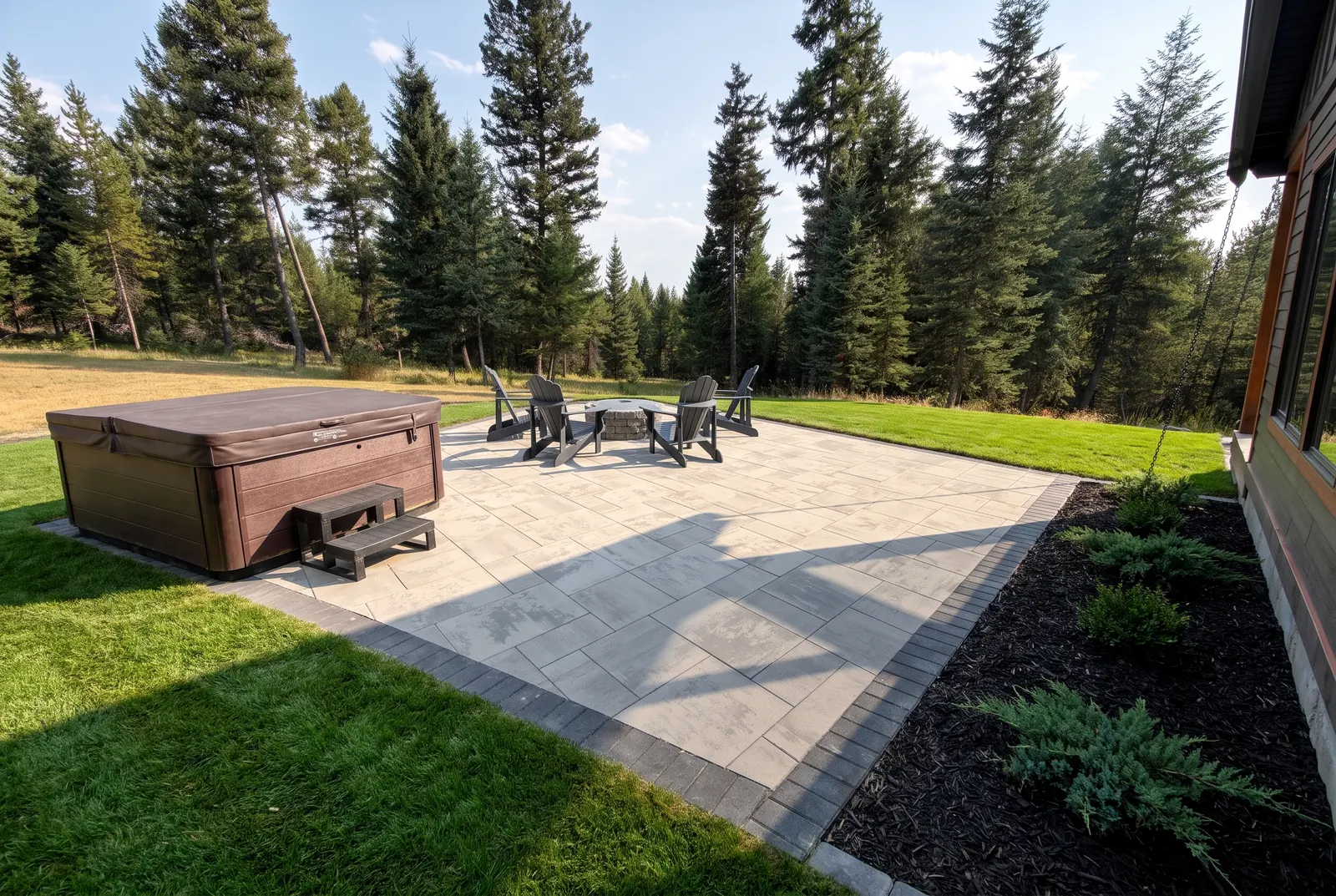
A paver patio survives a Montana winter only if the base sits below the frost line and sheds water instead of holding it. Skip either one and the ground will heave the patio out of level within a few seasons. In the Flathead Valley that means a compacted aggregate base built to the depth the Montana Residential Code calls for, not the shallower base that passes for standard in warmer states.
Why Frost Heave Destroys Paver Patios in Montana
Frost heave happens when water in the soil beneath a patio freezes and expands. If that water is trapped, because the base isn't deep enough, isn't well-draining aggregate, or the site doesn't shed water away from the patio, the ice pushes upward unevenly. One paver lifts a quarter inch, its neighbor doesn't, and by the third winter you've got a wave instead of a flat surface. It's not a defect that shows up on day one. It shows up after the first hard freeze-thaw cycle, which is exactly why so many DIY and out-of-state-crew patios look fine in October and rough by April.
Montana's Frost Line and Why Depth Matters
The Montana Residential Code sets frost depth requirements for footings and comparable structures based on climate data for the region, and in our part of the state that commonly runs 36 to 48 inches depending on elevation and local jurisdiction amendments (Montana Residential Code 2021, Ch. 3). A patio base doesn't have to match a footing depth exactly, but the principle is the same: whatever sits above frost-susceptible, saturated soil is going to move. The deeper and better-drained the base, the less that movement reaches the surface.
Base Material: What Goes Under a Patio That Lasts
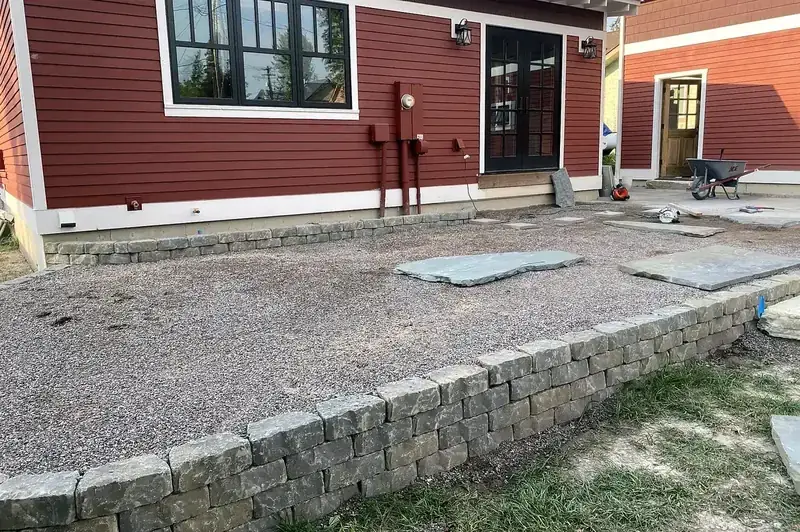
Most contractors building in a freeze-thaw climate compact 8 to 12 inches of open-graded, angular aggregate beneath a paver patio, deep enough to get below the frost-susceptible layer near the surface and open enough that water passes through it instead of pooling in it (frost line and foundation depth basics). That aggregate gets compacted in lifts, not dumped and leveled once. Skipping the lift-by-lift compaction is one of the most common shortcuts on a rushed job, and it's invisible until the first winter finds the soft spot.
Drainage: The Part Everyone Skips
Base depth gets all the attention because it's easy to picture. Drainage is the part that actually keeps water from freezing under the patio in the first place. That means grading the sub-base to shed water away from the structure, not toward it, and keeping the patio's finished grade pitched away from the house. A perfectly deep base sitting in a bathtub of trapped groundwater will still heave. The depth buys you margin, it doesn't replace drainage.
Flathead Valley Soil: Why Clay Makes It Worse
Heavy clay is common across the Kalispell area, and clay holds water longer than sandy or gravelly soil. That's the exact condition frost heave needs: water that doesn't drain away before the ground freezes. It's also why a base spec that works fine in a sandy-soil region can underperform here even at the same depth. The fix isn't a deeper hole so much as a base and drainage plan built for what's actually in the ground on your lot, which is different a mile in either direction across the valley.
DIY vs. Hiring It Out
A paver patio is one of those projects that looks approachable: rent a plate compactor, watch a video, lay some pavers on a weekend. The part that's hard to DIY correctly is judging compaction and drainage on your specific soil, not the paver-laying itself. Amateur installs tend to fail in the base, not the surface pattern, which means the mistake is buried and expensive to fix later instead of visible and cheap to fix early.
The plate compactor itself is often the tell. A rental-grade compactor run over aggregate in a few quick passes leaves a base that looks flat but isn't actually dense all the way through. Getting even, thorough compaction in each lift takes more passes and more attention than a first-timer expects, and there's no way to check the work once pavers are down, the base is either compacted right the first time or it isn't, and you won't know which until a freeze-thaw cycle tells you.
Signs Your Existing Patio Already Has a Frost Heave Problem
If you're evaluating a patio someone else built, a home you're buying, or one that's a few years old, there are visible signs of a base that wasn't built deep enough. Pavers that tilt or lift in the same spot every spring, gaps that open and close seasonally rather than staying fixed, and low corners where water visibly collects after rain are all signs the base isn't managing water or frost the way it should. None of those problems are cosmetic; they're evidence of what's happening underneath, and re-setting the surface pavers without addressing the base underneath just resets the clock on the same failure.
What Iron Peak Does
We build every patio base to sit below the frost-susceptible zone with compacted, well-draining aggregate and a grade that actually moves water away from the structure, no shortcuts on the part nobody sees once it's covered. If you're planning a patio, walkway, or want a base spec reviewed before you commit to a contractor, our paver patios & walkways page covers how we build. Retaining walls on sloped lots run into the same frost and drainage math, which is on our retaining walls page. We build for homeowners across the valley, including Columbia Falls, where clay soils and elevation changes make base prep especially unforgiving.
Ready to talk through your site? Get an estimate and we'll walk it with you before anything gets dug.