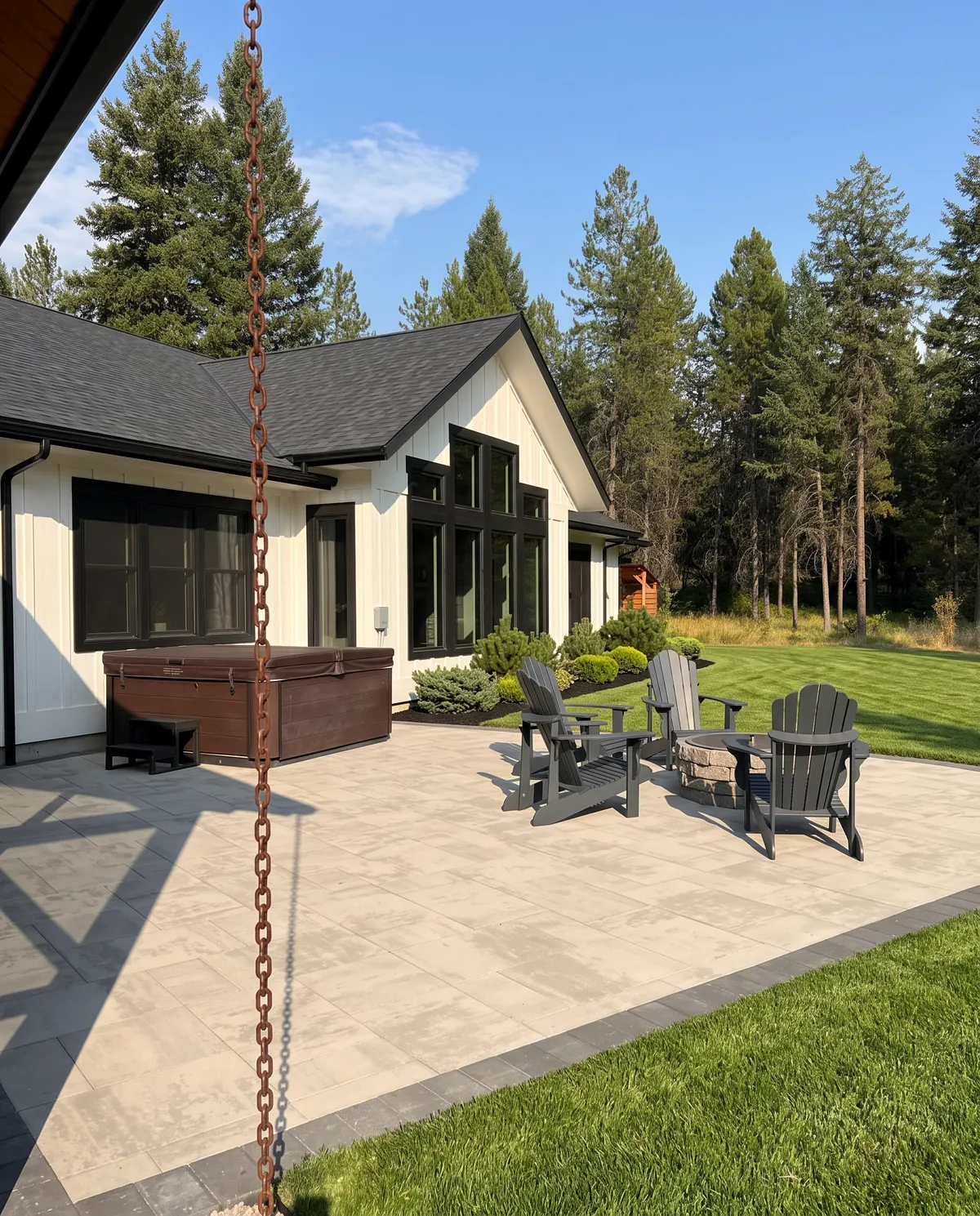
Paver patios in Montana cost more per square foot than the national average, and the reason isn't the pavers themselves, it's what has to go under them. National cost guides put installed paver patios around $30–$50 per square foot, and the deeper, frost-line-appropriate base required here is a meaningful part of why Montana projects tend to land toward the higher end of that range (HomeAdvisor: Paver Patio Cost 2025).
National Average vs. Montana Reality
National paver patio cost guides generally cite an installed range around $30 to $50 per square foot (HomeAdvisor: Paver Patio Cost 2025), with plenty of regional variation baked into that spread. Montana's climate pushes projects toward the higher end of published ranges because the base work required here is more extensive than what a national average assumes for a milder-climate install.
Material Costs: What You're Actually Paying For
Concrete pavers are generally the most budget-friendly option, permeable pavers cost more upfront but manage water on-site, and natural stone sits at the premium end of the range. Material choice is one lever on total cost, but on a properly built Montana patio, it's rarely the biggest one, base prep usually is (Stone Centers: Paver Cost Breakdown).
Base Preparation: Where Frost-Heave Cost Lives
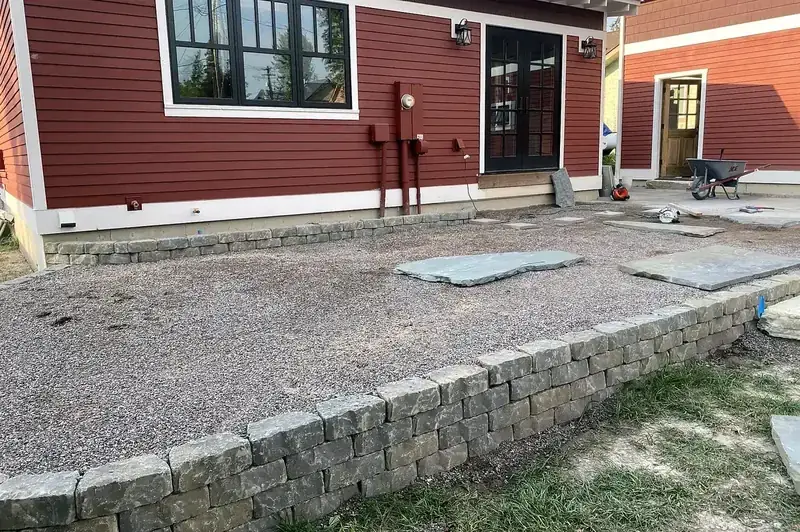
Building a patio base deep enough to stay below the frost-susceptible zone, commonly 8 to 12 inches of compacted aggregate in freeze-thaw climates, takes more excavation, more material, and more labor hours than a shallow base built for a milder climate (Elevate Outdoor: Build Cost Breakdown). This is the single biggest reason Montana patios cost more than the national average for the same square footage.
Drainage & Soil Work: The Hidden Line Item
Heavy clay soil, common around Kalispell, often needs extra grading or drainage work beyond the base itself to keep water from pooling against the patio. That's not always visible in a headline price-per-square-foot figure, which is part of why two "similar" quotes can land far apart once site-specific soil conditions get factored in.
Financing & Long-Term Value
A patio built to the right base spec costs more upfront than a shortcut version, but it also doesn't need to be rebuilt in three years when frost heave sets in. Factoring the cost of an early rebuild into a "cheaper" shallow-base quote usually erases most or all of the initial savings.
Why Two Quotes for the "Same" Patio Can Look Different
It's common to get two quotes for what looks like an identical project on paper and see a meaningful gap between them. Usually that gap traces back to base depth, compaction method, or drainage scope, not the pavers themselves, which are a small, easily comparable line item. A lower quote that skips proper base depth isn't a better deal; it's a different, less durable project wearing the same description. Asking a contractor directly how deep the base goes and what the drainage plan is tells you more than the bottom-line number does.
Questions Worth Asking Before You Sign
A few direct questions separate a real, buildable quote from a rough guess: how deep is the compacted base going, what happens to water that hits the patio during a heavy rain, and is the price based on an actual site visit or a phone estimate. A contractor who's walked your specific lot and can answer those clearly is working from real information about your soil and drainage, not a generic template applied to every job.
Size and Shape Affect Price Beyond Square Footage
Two patios with identical square footage don't always cost the same to build. A simple rectangle is more efficient to cut and lay than a patio with curves, multiple levels, or a border in a contrasting material, each of those adds cutting, labor, and waste that a straightforward shape doesn't. Access to the site matters too: a backyard reachable by equipment costs less to build than one that requires hauling material by hand around a house or through a narrow side yard.
Where Homeowners Can Reasonably Save
Not every cost-saving idea compromises the build. Choosing a less expensive paver material while keeping the base spec and drainage plan fully intact is a real way to control cost without cutting the part that determines whether the patio lasts. Simpler shapes, standard rather than premium paver patterns, and phasing a larger project into stages are all ways to manage budget without touching base depth or drainage, which is where corners actually shouldn't get cut.
Phasing in particular is worth considering on a larger project. Building the base and core patio footprint now, with a plan to add a seating wall, fire feature, or expanded footprint in a later season, lets a homeowner spread cost over time without compromising the part of the build that's expensive to fix later. What shouldn't get phased out is the base and drainage work under whatever square footage goes in first, that part needs to be built to full spec on day one, even if the visible footprint grows later.
What Iron Peak Does
We quote based on what your specific site actually needs, soil conditions, drainage, and base depth, not a flat rate that assumes every lot is the same. Our paver patios & walkways page covers materials and process, and if your patio is part of a larger yard project, our complete landscape renovations page covers how we sequence bigger builds. We build patios across the valley, including Kalispell and Whitefish.
Want a real number for your yard, not a national average? Get an estimate and Sawyer will walk the site with you.