Flathead Lake's north shore is cited as one of the higher-erosion shoreline zones globally, which makes erosion control the first landscaping decision on any lake lot, not an afterthought. The county's preferred approach is a gravel beach that absorbs wave energy, not a hard seawall that deflects it, and most shoreline work needs a permit before it starts.
The Erosion Challenge on Flathead Lake's North Shore
Wildlife officials and county reporting have flagged Flathead Lake's north shore as facing an unusually severe erosion rate by global standards, driven by wave action, seasonal water level swings, and shoreline soil composition (Daily InterLake: Gravel Beach Mitigation). For lake-lot owners, that's not background trivia. It's the reason erosion control has to be part of the landscaping plan from day one, not something addressed after the shoreline has already started receding.
Gravel Beach vs. Seawalls
The county-preferred method for mitigating shoreline erosion is a gravel beach, using cobble-sized stone that absorbs wave energy as it hits the shore, rather than a hard seawall that reflects wave energy back and can accelerate erosion at its base and ends (Daily InterLake: Gravel Beach Mitigation). This is a case where the lower-tech-looking solution is the one that's actually recommended.
Large Boulders for Erosion Control
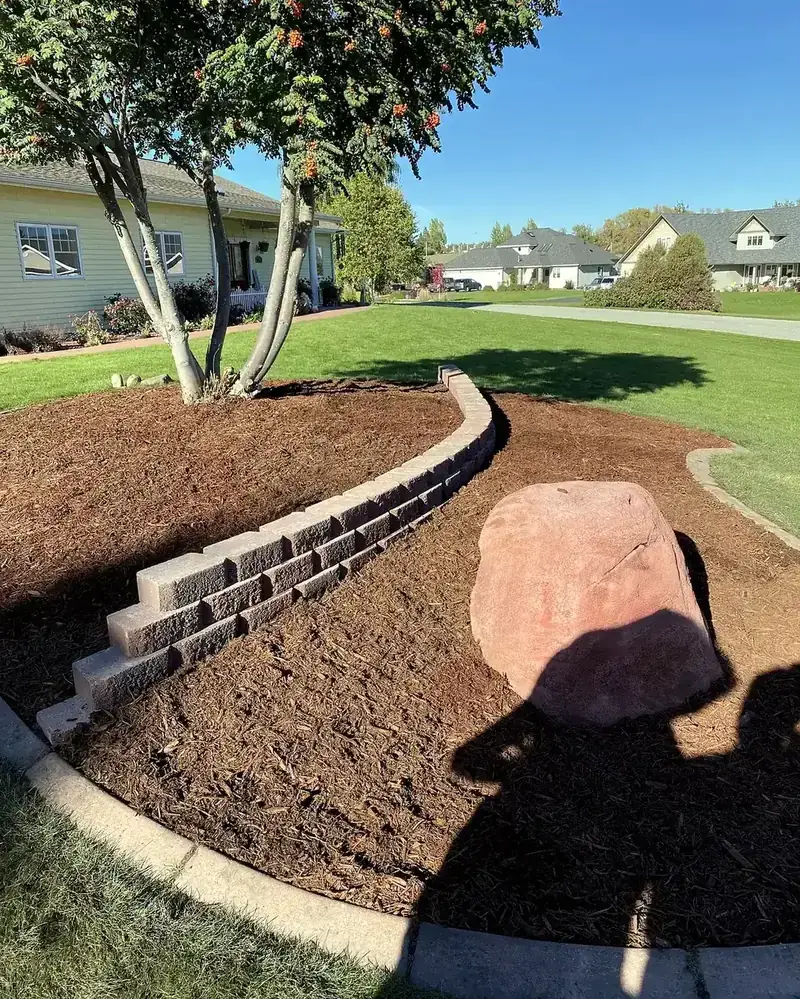
Larger boulders, placed to break up wave energy or stabilize a bank, are another commonly used tool alongside gravel. They add structure and can double as an aesthetic feature rather than a purely functional one, which matters on a lot where the shoreline is also the view.
Flathead County Lakeshore Regulations
Flathead County maintains lakeshore protection regulations that govern work near the water, and the county has been reviewing updates to those rules with public input on stronger enforcement (Flathead Beacon: Lakeshore Protection Rules). If you own lake frontage, it's worth reading the current version of these regulations directly rather than assuming last year's rules still apply.
Permits Required for Lakeshore Work
Work within a defined horizontal distance of the mean annual high-water line, commonly cited around 20 feet, generally triggers a permit requirement under Flathead County's lakeshore protection rules (Flathead County: Lakeshore Protection Regulations). Confirm the current threshold and process with the county before starting any shoreline work, these rules get revisited, and building without a required permit is a bigger problem than waiting for one.
Erosion-Resistant Native Plants
Deep-rooted native species tolerate the seasonal water-level swings unique to a reservoir-managed lake better than shallow-rooted ornamentals, which tend to wash out or fail during high water and spring runoff. Planting for erosion resistance on a lake lot is a different exercise than planting an inland bed, the water table itself is part of the design problem.
What Not to Do on a Lake Lot
A few common instincts make lakeshore erosion worse rather than better. Hard vertical seawalls, while they feel like the obvious "stop the water" solution, tend to reflect wave energy back into the water rather than absorbing it, which can accelerate erosion at the wall's base and ends. Removing shoreline vegetation for an unobstructed view strips out root systems that were doing real stabilization work. And any shoreline alteration started without confirming permit requirements first risks having to undo work that didn't get approved, a more expensive outcome than waiting the extra weeks for approval up front.
Planning Ahead of Water Level Changes
Flathead Lake's water level is managed seasonally, which means a shoreline that looks stable at one water level can behave very differently at another. Erosion control planned around only the water level you see on the day you're standing there is planning around an incomplete picture. This is part of why a professional shoreline assessment matters more here than it might on a static, non-managed body of water. The design has to account for a range of conditions, not just one snapshot.
Spring Runoff and Its Effect on Shoreline Soil
Spring runoff feeding into the lake brings a seasonal surge in water volume and flow that puts more pressure on shoreline soil than the rest of the year. A shoreline that holds up fine through a calm summer can still lose ground during a high-runoff spring if it wasn't built with that seasonal swing in mind. Erosion control that only accounts for average conditions, rather than the higher-stress spring window, tends to underperform exactly when it matters most.
Erosion Control as an Ongoing Relationship With the Shoreline
Unlike a patio or a retaining wall on dry land, lakeshore erosion control isn't a one-time build-it-and-forget-it project. Gravel beaches settle and shift with wave action over time, boulders can move during high-water events, and vegetation needs monitoring to confirm it's actually establishing root systems rather than washing out before it gets the chance. Checking in on a shoreline periodically, rather than assuming an initial install holds indefinitely, is part of realistically owning lake frontage in a place with this much seasonal water movement.
What Iron Peak Does
We build lakeshore erosion control with gravel beach and boulder placement suited to the site, and coordinate the permit process rather than starting work and hoping it's compliant. Our retaining walls page covers wall and stabilization work, and if a lakeshore project is part of a larger property overhaul, our complete landscape renovations page covers how we sequence it. We work lake-adjacent lots including Bigfork and Somers.
Have a shoreline that's eroding? Get an estimate and we'll walk the property with you.